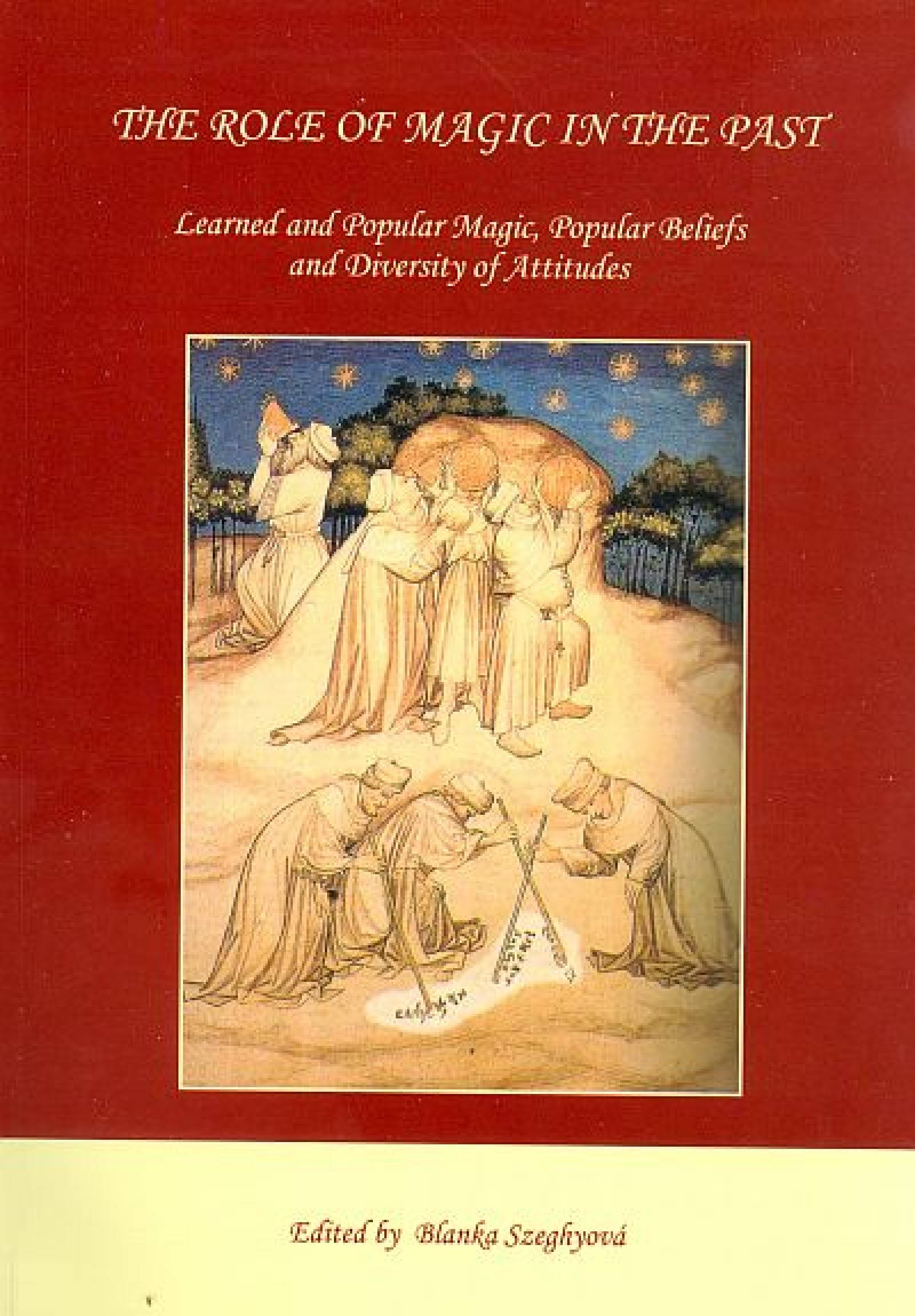
The Role of Magic in the Past

The Role of Magic in the Past
Learned and Popular Magic, Popular Beliefs and Diversity of Attitudes

Szeghyová Blanka (ed.)

Vydavateľstvo

Spoločnosť PRO HISTORIA

Jazyk

angličtina

Počet strán

256

Rok vydania

2005

Hmotnosť

424,00g

Formát

170x235

Väzba

Mäkká väzba

EAN

8096936638

The book is a very diverse collection of papers, in which alongside authors who are recognized experts in the topic and have published several books ...on the subject of magic are young scholars who have only recently joined the community of 'magical'scholarship.

Čítať viac...
8,00€
Pridať do košíka logo
skladom

Mohlo by vás zaujímať

Geschichte der Deutschen in Ungarn

Geschichte der Deutschen in Ungarn

Das zweibändige Handbuch fasst die Geschichte der Deutschen in Ungarn vom Mittelalter bis heute zusammen. Zeitlich wird die von West nach Ost verlaufene Siedlungsmigration von ihren Anfängen unter König Stephan I. bis zu ihrem Höhepunkt im 18. Jahrhundert behandelt und die Geschichte der in Ungarn ansässig gewordenen einzelnen deutschen Siedlergruppen bis zur Auflösung des historischen Ungarns 1918 näher untersucht. Von 1918 bis zur Gegenwart, das heißt bis zu den Parlaments- und Kommunalwahlen 2006, steht die Geschichte der Ungarndeutschen im Mittelpunkt. Die Darstellung sucht ein Narrativ der Gruppengeschichte der Deutschen in Ungarn zu entwickeln, das sowohl die interethnischen Beziehungen zu den Magyaren als auch die Verflechtung mit anderen Minderheiten berücksichtigt und somit eine multiethnische Perspektive einnimmt. Am Beispiel der Deutschen wird die Geschichte des Zusammenlebens sprachlich, ethnisch oder religiös unterschiedlicher Gruppen im historischen Kontext, in Zeit und Raum verdeutlicht. Gruppen wie die Deutschen in Ungarn benötigen ihre eigene Geschichtsschreibung. Dieses historische Narrativ formuliert ein Identitätsangebot durch die reflektierte und selbstkritische Aufarbeitung ihrer Vergangenheit. Die Darstellung auch umstrittener Geschichtsperioden wie beispielsweise der NS-Zeit oder der Vertreibung soll vor diesem Hintergrund zur Überwindung von Traumata und Tabuisierungen beitragen. Es geht hier um eine transnationale, auf die Prozesse der gesamteuropäischen Geschichte hin geöffnete Geschichtsschreibung, die eine Einordnung der Gruppengeschichte in größere historische Zusammenhänge gewährleistet und die Besonderheiten der Gruppe herausstellt. Táto dvojzväzková príručka zhŕňa dejiny Nemcov v Maďarsku od stredoveku až po súčasnosť. Časovo sleduje postupnú migráciu osídľovania zo západu na východ od jej začiatkov za kráľa Štefana I. až po vrchol v 18. storočí a podrobnejšie skúma dejiny jednotlivých skupín nemeckých osadníkov, ktorí sa usadili v Maďarsku, až do zániku historického Uhorska v roku 1918. Od roku 1918 až po súčasnosť, teda až po parlamentné a komunálne voľby v roku 2006, stojí v centre pozornosti história maďarských Nemcov. Výklad sa usiluje vytvoriť naratív skupinových dejín Nemcov v Maďarsku, ktorý zohľadňuje nielen medzi-etnické vzťahy s Maďarmi, ale aj prepojenie s inými menšinami, a tým prijíma viac-etnickú perspektívu. Na príklade Nemcov sa tak ozrejmuje dejinný kontext spolunažívania jazykovo, etnicky alebo nábožensky rozličných skupín v čase a priestore. Skupiny ako Nemci v Maďarsku potrebujú vlastné dejepisectvo. Takto vytvorený historický naratív formuluje ponuku identity prostredníctvom reflektovaného a sebakritického spracovania ich minulosti. Výklad aj sporných dejinných období, ako napríklad obdobia národného socializmu alebo vyhnania, má z tohto hľadiska prispieť k prekonaniu tráum a tabuizácií. Ide tu o transnacionálne dejepisectvo, otvorené procesom celoeurópskych dejín, ktoré zabezpečuje začlenenie dejín skupiny do širších historických súvislostí a zároveň zdôrazňuje jej osobitosti.

Obsah

Introduction


Research Problems of Magical Texts in Central Europe – Benedek Láng

The Magic of Image: Astrological, Alchemical and Magical Symbolism at the Court of Wenceslas IV – Milena Bartlová

The Occult Sciences in Early Modern Hungary in a Central European Context – György Endre Szőnyi

An Outline History of Alchemy in Slovakia – Miloš Jesenský

The Mystery of the Transmutation of Iron into Copper in the 16th – 18th Centuries – Miroslav Kamenický

Magic and Demonology in Albert Szenci Molnár’s Personal Commonplace Book – Márton Szentpéteri

Magic Features in Johann Heinrich Alsted’s Apocalyptics – Olga Lukács

Weather Magic in the Early Modern Period as Reflected in the Minutes of Witchcraft Trials – Éva Pócs

Servants of the Devil in Krupina – Milan Majtán

Witch-Hunt in Szeged in the Early Eighteenth Century – István Petrovics

The Mystery of Birth: Magic, Empirical and Rational Approaches to Women’s Medicine In the Medieval and Early Modern Periods – Tünde Lengyelová

Elements of Magical – Medicinal Practice. The Position of the Witch and Wizard in Slovakia – Katarína Nádaská and Martina Sekulová

The Mediation of Poisoning. Magic Embedded in Everyday Medical Knowledge – Emese Bálint

Incantations in Medical Advice and Recipes from 16th to 18th Centuries – Jana Skladaná

Some Aspects of the Love Magic Beliefs in Eastern Serbia – Danijela Djuričić

The Role of Black Magic in Controlling Social Balance in Moldavian Chango Villages – Peti Lehel

Bells and Magic – Juraj Gembický

Turkish Magic and Habsburg Propaganda – Elisabeth Klecker

Popular Piety and Magic in Hungary in the 17th Century – Ingrid Kušniráková

Magical Practices in the Books of Miracles – Markéta Holubová

The Supernatural and Claims of Scientificity in Russian Popular Culture, 1875 – 1914 – Julia Mannherz

Magic Elements in Slovak Romantic Ballads – Irena Malec


Contributors

Gazetteer of Historical Place Names